


What is a Magnetic Tape?
A magnetic tape is a relatively small gripping device made of a plastic film with a ferromagnetic covering that permits data preservation. The tape still finds great usage today thanks to its high storage capacity and sequential storage routine.
Types of Magnetic Tape
Today, magnetic tapes are tasked with numerous roles hence there is a myriad of different tapes. The most common magnetic tapes include:
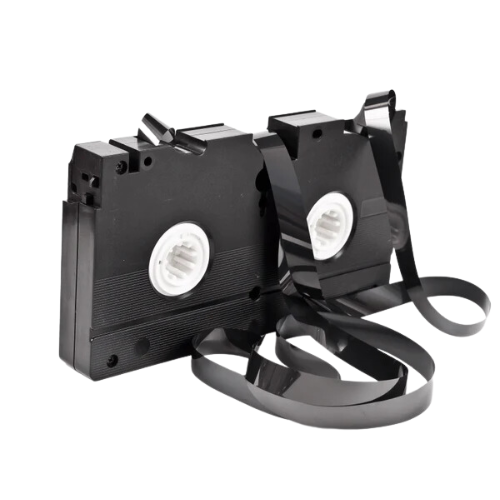
Magnetic videotapes have been used for ages to preserve and playback moving images and they are still relatively prominent. They mainly accommodate numerous formats such as Betamax and VHS. However, the emergence of more advanced digital alternatives has watered down their prominence.
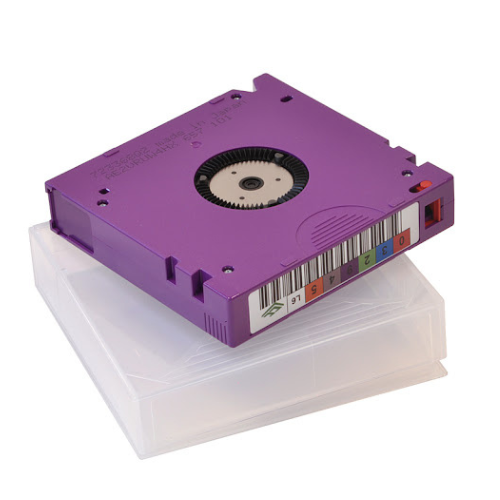
In earlier years, magnetic tape drives were often found in libraries and data centers due to their immense footprint. However, in later years, smaller drives, capable of preserving even more data have been invented.
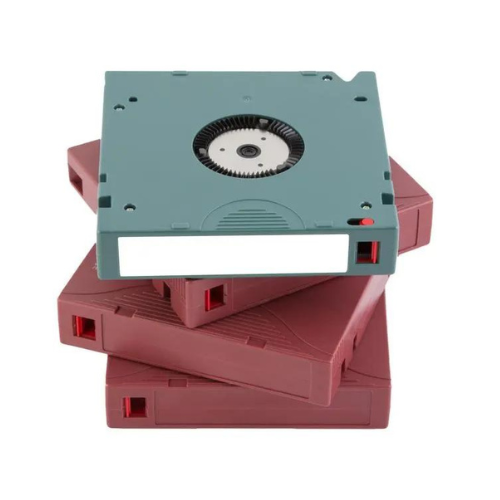
They came into existence in the 1980s and they are known for exploiting linear serpentine recording. This format is extremely reliable explaining the widespread use of DLT tapes in professional activities like commercial music studios.
Advantages of Magnetic Tape
Despite the existence of advanced storage options like SSDs, magnetic tapes continue to dominate the market thanks to their unique rewards.
- Highly Secure: You can preserve sensitive information without worrying about data breaches thanks to their immunity to cyber-attacks.
- High Storage Capacity: Contemporary magnetic tapes can preserve humongous amounts of data (up to 580 terabytes) safely and conveniently.
- Offline Storage: They are not connected to physical networks and this permits you to archive essential data offline.
- Cost-Effective: Compared to other storage options, magnetic tapes are the most pocket-friendly.
- Energy-Efficient: Once you have fed data into your tape, no further power will be necessitated to preserve your data.
- Highly Durable: With proper care, your magnetic tape can serve you efficiently for up to 30 years.
- Portable: In addition to having exceptional storage capacities, they are extremely light making them easier to carry around.
- Disaster Resilience: Your magnetic tape can retain its structure and effectiveness despite being exposed to harsh conditions.


Features of Magnetic Tapes
Although there are more contemporary data storage alternatives, the use of magnetic tapes continues to proliferate due to their distinct properties.
- Composition: Primarily, they comprise a wafer-thin film layered with a ferromagnetic coating.
- Sequential Access: To obtain preserved data, you must go through the sequentially arranged data blocks.
- Speed: Magnetic tapes have a higher seek time and this translates into comparatively lower data access and transfer speed.
- Track Arrangement: Your data is preserved in varying configurations such as LTO, DAT, and 9-track formats.
- Data Security: They are air-gapped and this makes it harder for unauthorized individuals to access your sensitive data.
- Storage Capacity: Magnetic tapes have some of the highest storage capacities spanning up to hundreds of terabytes.
- Reusability: You can wipe out insignificant data and replace it with essential data whenever you need.
Primary Uses of Magnetic Tapes
Magnetic tapes continue to defy the test of time thanks to their unique characteristics coupled with their reliability. Today, their use spans the following fields;
- Data Storage: Magnetic tapes are widely utilized in homes and businesses to archive essential information for later use. They can preserve distinct forms of data including audio, text, and videos.
- Video Production: In video production, magnetic tapes are often utilized to record and preserve movie scenes.
- Video Surveillance: Magnetic tapes are also widely incorporated into security systems to preserve live video surveillance footage.
- Mainframe Systems: Modern magnetic tapes are still being exploited to archive digital data in offline mainframe computers.
- Audio Recording: From the 20th century up to date, magnetic tapes continue to be of help in various audio recording activities.
- Magnetic Signage: Owing to their immense gripping abilities, magnetic tapes make great adhesives for holding signs and labels.

How Magnetic Tape Storage Works
Although magnetic tape storage is largely considered outdated, it is still quite prominent. To archive or preserve data, you must first understand how magnetic tapes work.
Step 1: Preparation
To archive data magnetically, you first need a magnetic tape and this can be achieved by coating a thin film layer with a ferromagnetic material. Once the material is magnetized, you have a magnetic tape ready to preserve your data.
Step 2: Data Preparation
Data preserved in magnetic tapes has to be in binary format and this requires encoding. During this process, your data is translated into “0”s and “1”s. Subsequently, the encoded data is read by an appropriate scanner.
Step 3: Write Process
For your data to be archived, the magnetic field lines of your magnetic tape are aligned with those of an appropriate reader. The alignment of these field lines represents the nature of your data hence this process concludes with writing your data on the tape.
Step 4: Data Retrieval
After writing your data on the magnetic tape, the following step involves reading the data. To read or access this data, you need a read head capable of decoding the preserved data. This head interprets your encoded data allowing you to access it in its original state.
 English
  Arabic
  Spanish
  German
  French
  Portuguese