


What are Sintered SmCo Magnets?
Sintered SmCo magnets are unique and distinct rare-earth magnets made through sintering process. They are ideally made from cobalt, samarium, and some other rare earth metal materials. These are some of the most common permanent magnets available today.
Common Shapes of Sintered Samarium Cobalt Magnets

These magnets are axially and diametrically magnetized, with a size range of D: 1–100 mm and T: 0.5–100 mm (axially magnetized) and D: 1–100 mm and T: 0.5 – 100 mm (diametrically magnetized).

These magnets are both axially and diametrically magnetized. The size ranges from ID: 1–90mm and OD: 5–100mm (axially magnetized) to OD: 5–100mm and ID: 1–90mm (diametrically magnetized).
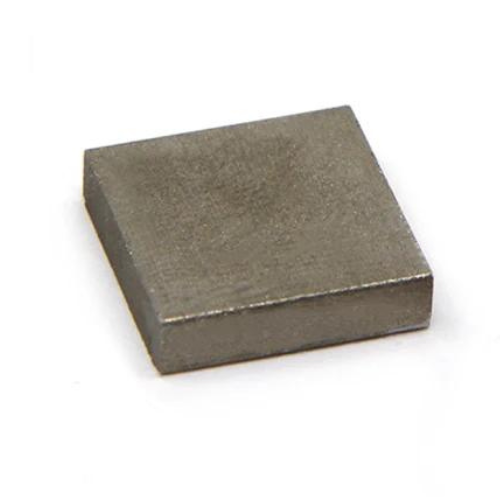
This shape is thickness magnetized with sizes L: 1–160mm, W: 1–100mm, and T: 1–100mm.

It comes diametrically magnetized with sizes L: 1–120mm, W: 3–100mm, and H: 11–60m.
Benefits of Sintered Samarium Cobalt Magnets
- Energy density is high – This feature is what makes these magnets one of the strongest you can find out there now.
- Resists corrosion – These magnets are famous for their ability to resist corrosion. So, they still thrive in environments that are harsh.
- Cost is always low – When compared to the other rare earth magnets on the market, sintered SmCo magnets cost less.
- Temperature stability is always high – These magnets can stand temperatures of up to 350°C. Therefore, they are perfect for relatively high temperature applications.


Applications of Sintered Samarium Cobalt Magnets
Here are some of these magnets applications:
- Sensor applications
- AC servo-motors
- Computer hard drives
- Bias magnets
- Actuators
- Aerospace
- Watches
- Printers
- High output and high-performance motors, etc.
Properties of Sintered SmCo Magnet
Below are some properties of sintered SmCo magnets:
- Density ranges from 8.2 to 8.4 g/cm3.
- Curie temperature stands at 700 to 880°
- Recoil permeability is 1.05 to 1.10
- Tensile strength is 35 to 40 MPa
- Its vickers hardness is between 400 to 600 MPa.
- It has a bending strength is between 150 to 180 MPa.
- Resistivity is from 0.5 to 0.9 μΩ.m. This means it had very good resistance.
- Highest working temperature ranges between 250 to 350°
- Its compressive strength ranges between 800 to 1000 MPa.
- Maximum magnetic energy is around 18 MGOe or 140 kJ/m3 with a reversible Br temperature coefficient at -0.05%/°
- Thermal expansivity – magnetization is 10-6°C and 5-9

How Sintered SmCo Magnets are made


The process of making sintered SmCo magnets is simple. It is as follows:
Step 1 – Gathering Needed Materials
To begin with, all the raw materials that are required to make sintered SmCo magnets need to be gathered. Some materials needed include samarium, cobalt, iron and other materials.
You will also require induction furnace, argon, mold, machining and grinding machine, amongst others.
Step 2 – Melt all Materials
Put all materials in the furnace in required proportions. You should heat, melt and ensure the materials mix together. Argon should be added to the mixture in the furnace to ensure alloy materials are formed.
Step 3 – Cool in the Mold
When melting is done, pour the melted material into the mold. When done, it forms ingots.
Step 4 – Turn into Fine Particles
Immediately after ingots get cooled down in step 3, they should be broken down, ground, and then milled. When this process is done, they become powdery.
Step 5 – Transform into Solid Form
When it becomes powdered, it needs to be transformed into a solid. Here, you will need to use the right bonding chemicals to ensure the fine particles made in step 4 are bonded together. This should be done by pressing the powder into a die and sintering it at 120°C to have the powder fused into a solid.
Step 6 – Solution Treatment Process
In its solid sintered form, after step 5 is done, a solution treatment is undergone. This should be done at 120°C. After that, it should be tempered between 700°C and 900°C. With the tempering done, you should have it cooled under an externally applied magnetic field.
Step 7 – Machining and Grinding
In this step, sintered SmCo magnets are machined and grinded. These magnets need to be grinded and finished. Water-cooled diamond-coated grinding machines should be used for the processes of grinding and finishing. This machine is needed because of how hard and brittle the material is. Also, the dust that is created is highly flammable.
Step 8 – Coat and Magnetize
With the magnet formed in step 7, the magnet finally needs to be coated and magnetized.
 English
  Arabic
  Spanish
  German
  French
  Portuguese